Last Updated on August 2, 2026
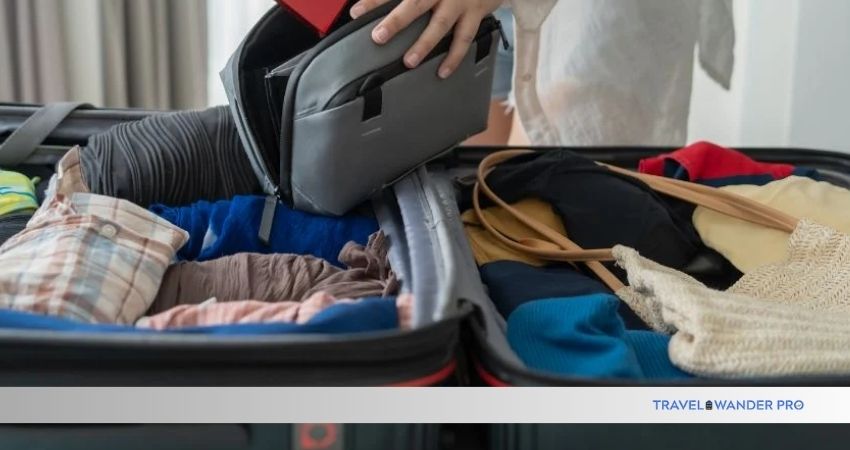
Packing cubes make packing faster, neater, and help you fit more in your suitcase.
I’ve spent years testing travel gear and teaching people how to get the most from small suitcases. This guide shows how to use packing cubes effectively, step by step. You will learn why packing cubes work, which types to buy, how to pack like a pro, real mistakes to avoid, and quick care tips. Read on to make your next trip calmer, lighter, and far more organized.

Why use packing cubes?
Packing cubes bring order to travel. They keep clothes grouped and easy to find. They also compress items to save space in carry-on and checked luggage.
Benefits of packing cubes
- Better organization. Use one cube per outfit, type of clothing, or family member.
- Faster unpacking. Pull out a cube and drop it into a drawer or shelf.
- Space saving. Compression cubes reduce bulk and let you fit more.
- Clean/dirty separation. Keep worn clothes separate in a cube for easy laundry.
Limits to expect
- They do add small weight. Lightweight cubes reduce this issue.
- Compression has limits. Very bulky items still need space.
- Not a replacement for smart packing. Cubes help but don’t fix overpacking.
Experience note: I tested packing cubes across weekend breaks and multi-week trips. When used right, packing cubes cut search time in half and made repacking simple.
Types of packing cubes and what to choose
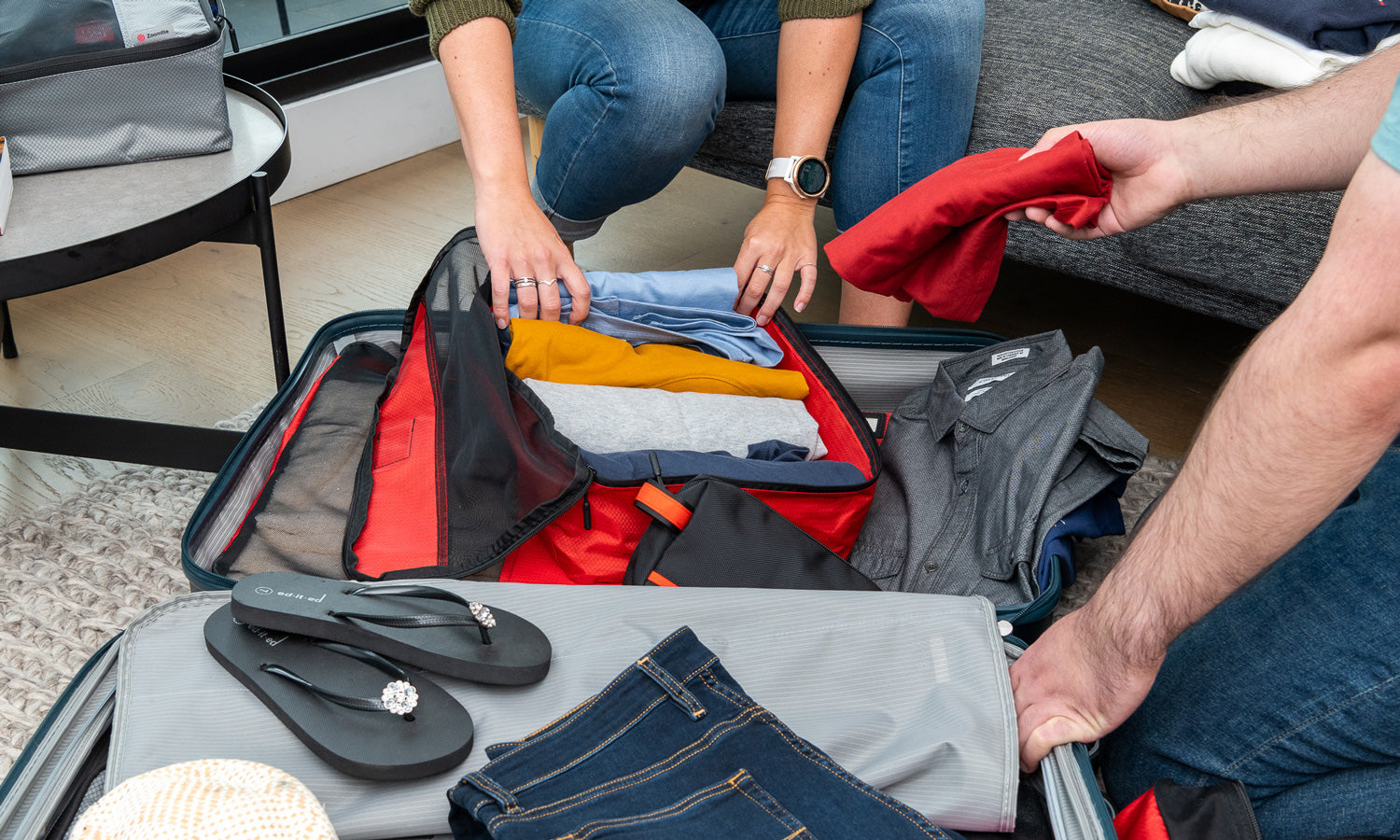
Not all packing cubes are the same. Pick a style that fits your trip and gear.
Common types
- Mesh-top cubes. Good for breathability and quick ID of contents.
- Compression cubes. Have extra zips to squeeze air out and save space.
- Cubes with handles. Easier to pull from luggage or hang in a closet.
- Toiletry cubes. Waterproof lining for liquids and small leak control.
- Shoe cubes. Shape-protecting pockets for shoes and dirt separation.
How to choose
- For carry-on trips choose light, thin cubes to keep weight down.
- For checked bags prefer durable nylon or ripstop for rough handling.
- Match cube sizes to your suitcase layout. Slim cubes for narrow bags; larger cubes for big suitcases.
- Buy a set with varied sizes to mix and match.
Personal tip: I like one mesh medium cube for shirts, one compression cube for sweaters, and a small toiletry cube for chargers and toiletries.

How to pack with packing cubes: a step-by-step method
Follow this simple flow. It works for short trips and long trips.
- Plan and sort
- Lay out all items you plan to take.
- Group items by use: daytime, sleepwear, workout, underwear, electronics.
- Select cubes
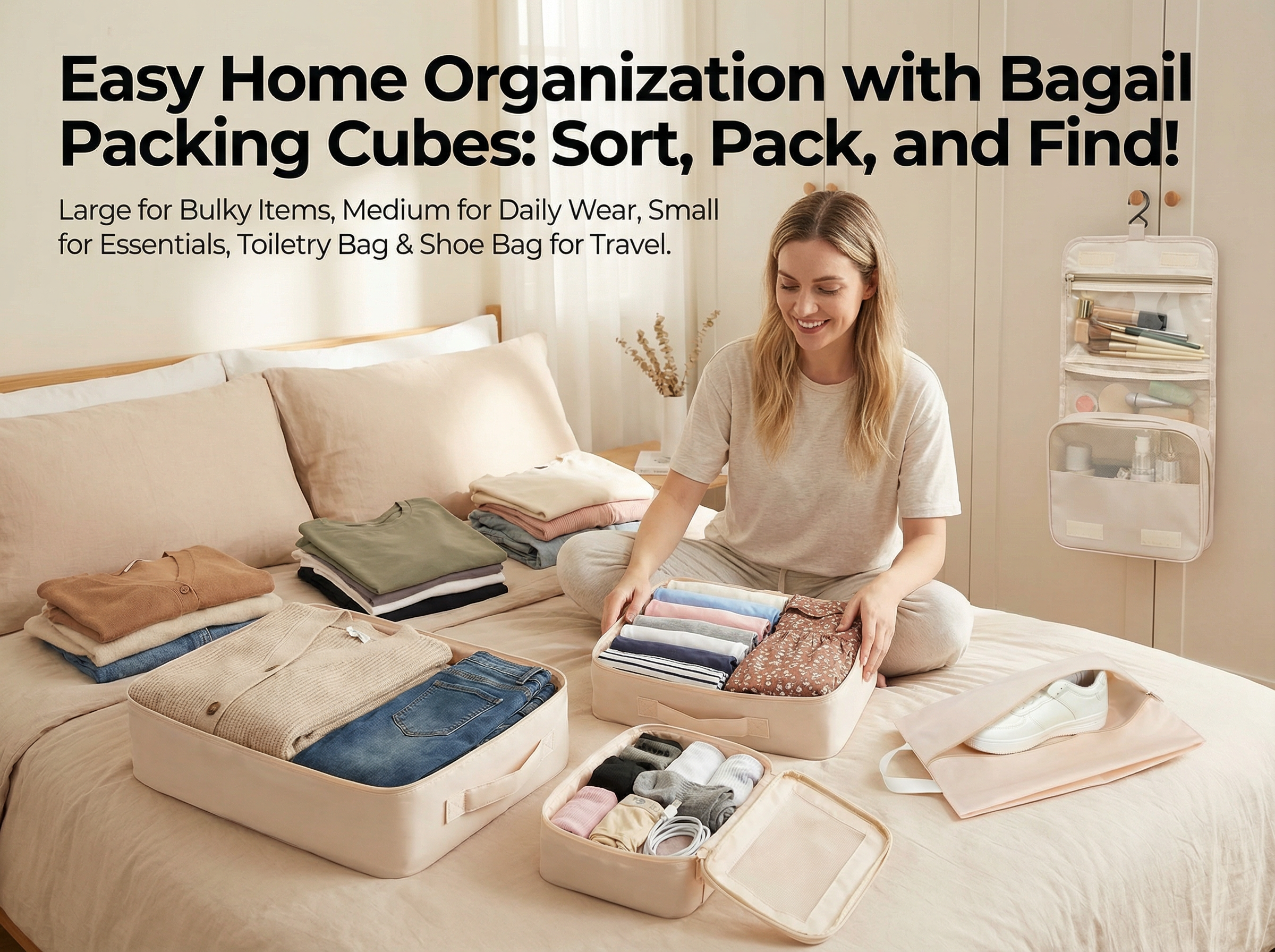
- Use a small cube for underwear and socks.
- Use a medium cube for shirts and light pants.
- Use a large compression cube for sweaters and jackets if needed.
- Fold or roll smartly
- Fold dress clothes flat to reduce creases.
- Roll casual shirts and tees to save space and reduce wrinkles.
- Stack similar items together inside a cube for even compression.
- Pack cubes in your suitcase
- Place the heaviest cube at the base of the suitcase near the wheels.
- Lay flat cubes first to create a firm base.
- Use small cubes to fill gaps and keep cubes from shifting.
- Access and unpack
- Keep a toiletry or day-cube near the top for quick access.
- At your destination, take cubes straight to a drawer or shelf to unpack fast.
- Keep one cube for dirty clothes to simplify laundry.
Practical example: For a five-day trip, pack one medium cube with three shirts and two pants, one small cube for underwear and socks, and one toiletry cube. Put the medium cube at the bottom, small cube in a gap, and toiletry cube up top.
Organization strategies and packing systems
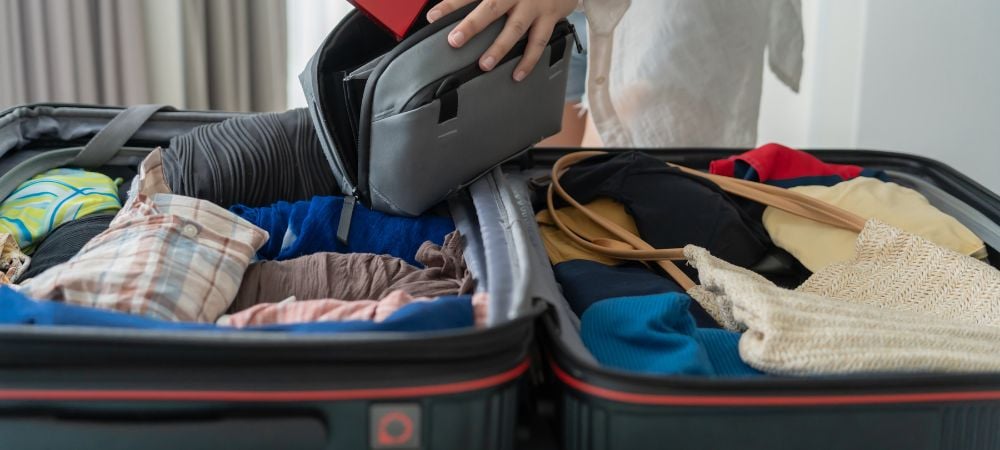
Use systems so packing cubes work every trip. Pick one method and stick with it.
Popular systems
- By outfit. One cube per outfit or day. Makes dressing quick.
- By clothing type. One cube for shirts, one for bottoms, one for underwear.
- By person. For family travel, use color-coded cubes for each person.
- By function. One cube for work clothes, one cube for casual clothes, and one for gym clothes.
Color and label tips
- Use a simple color code: blue for shirts, green for bottoms, red for kids.
- Add small labels or tags on zippers to read at a glance.
Carry-on vs checked bag strategy
- In carry-on, keep essentials and one outfit accessible.
- In checked luggage, use compression cubes for bulky items.
- For long trips, rotate cubes between suitcase and hotel drawer to keep things tidy.
My trick: I keep a spare, empty cube in my bag. It becomes the laundry cube on the way home.
Packing cube care and maintenance
Care extends life and keeps cubes working well.
Cleaning tips
- Empty cubes and check zippers after every trip.
- Hand wash or machine wash on gentle, then air dry to avoid heat damage.
- Spot clean waterproof liners after spills and let them dry fully.
Storage tips
- Store cubes flat or folded in a closet when not in use.
- Avoid heavy stacking to keep mesh panels from tearing.
When to replace
- Replace cubes when zippers fail, seams split, or mesh tears.
- High-quality cubes last many trips, but cheap ones can fail in months.
Common mistakes to avoid
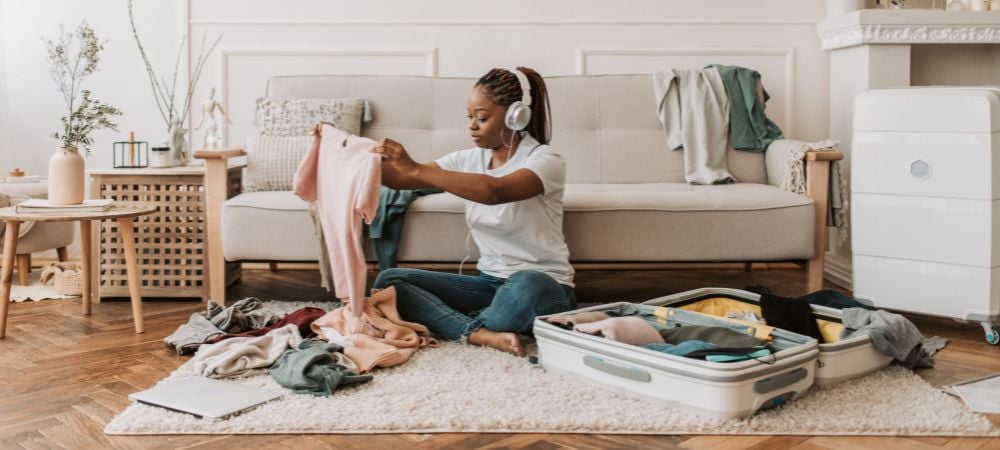
Avoid these errors to get the full benefit from packing cubes.
Typical mistakes
- Overfilling cubes so zippers strain and break.
- Using too many cubes that create clutter and waste space.
- Putting heavy items in small cubes which can rip seams.
- Not testing cube sizes in your suitcase layout before travel.
Lessons from experience: I once packed six identical cubes in a small carry-on. They shifted and I had to repack. Now I pre-fit cubes into my bag to avoid wasted time.

Real-life tips, tweaks, and examples
Small habits make packing cubes more useful.
Travel hacks
- Use compression cubes for winter layers and save space for souvenirs.
- Store chargers and small electronics in a mesh cube to avoid tangles.
- Use a clear pouch inside a cube for fragile items like sunglasses.
- Keep a slim cube near the top for items you need during transit.
Example packing list for a 7-day city trip
- Large compression cube: two sweaters and one light jacket.
- Medium cube: five shirts and two pants.
- Small cube: seven pairs of underwear and socks.
- Toiletry cube: toiletries and a small towel.
- Shoe cube: one pair of shoes or sandals.
Personal story: On a 10-day trip, packing cubes let me fit an extra pair of shoes without buying a larger bag. I kept clothes neat and saved money on baggage fees.
Troubleshooting and special cases
Not every trip is the same. Here’s how to adapt.
Business travel
- Use a flat cube for dress shirts to reduce wrinkles.
- Place shirts face down and fold carefully. Add tissue paper if needed.
Family travel
- Assign a color or label per child. It speeds packing and unpacking.
- Keep a small cube for snacks and small toys in a carry-on.
Adventure or outdoor trips
- Choose water-resistant cubes for wet gear.
- Use compression cubes for sleeping clothes and base layers.
Flight limits
- Check airline carry-on and personal item rules. Packing cubes won’t change size limits but help you use space smarter.

Frequently Asked Questions of How to Use Packing Cubes Effectively
What size packing cubes should I buy?
Choose a set with small, medium, and large cubes. Small cubes fit underwear and accessories, medium ones hold shirts, and large cubes take sweaters and pants.
Can packing cubes save space in a carry-on?
Yes. Compression cubes can reduce bulk and make better use of suitcase volume. But very bulky items may not compress much.
Do packing cubes reduce wrinkles?
They can reduce wrinkles if you fold or stack items neatly. Use flat packing for dress shirts and roll casual clothes for space and fewer creases.
Are packing cubes allowed on planes?
Yes. Packing cubes are allowed in carry-on and checked luggage. They do not count as extra baggage but must fit within airline size rules.
How do I keep dirty clothes separate with packing cubes?
Keep a dedicated cube or a small laundry pouch for worn clothes. A lined or waterproof cube helps prevent smells and damp from spreading.
Can packing cubes be used for long trips?
Yes. For long trips, rotate cubes through laundry and use spare cubes for clean clothes. Choose durable fabrics and quality zippers for long-term use.
Conclusion
Packing cubes change travel from chaotic to calm. They make packing faster, keep clothes neat, and help you fit more into your bag. Start by choosing a small set with varied sizes, test a packing system for one trip, and refine it from there. Try the outfit-by-outfit or the clothing-type method and keep one cube for dirty items. Make packing simple and repeatable so you enjoy travel more. Ready to make your next trip easier? Try packing cubes on your next outing, and share your experience or questions below.